Refusal Reversed: A Practical Guide to Winning Planning Appeals in 2026

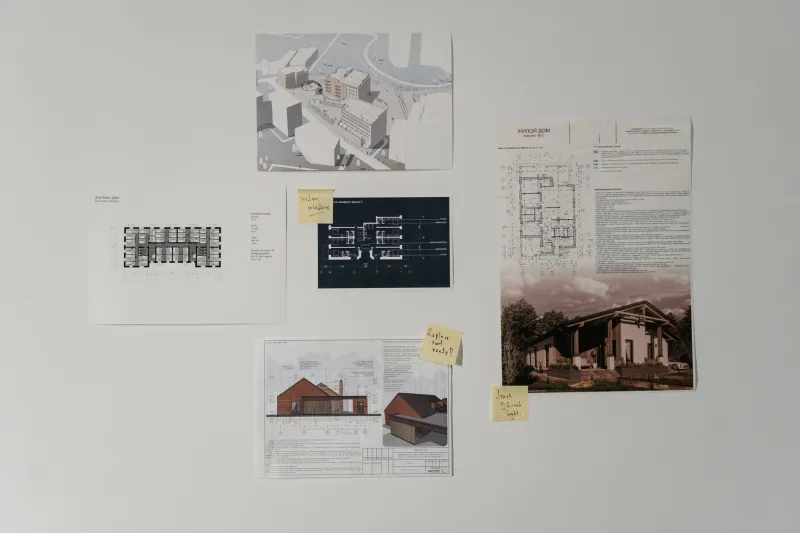
Photo: Planning appeal documents and site plans on a UK desk, via a.c-dn.net
Receiving a refusal is rarely the end of the story. For many homeowners and small developers, it is the point at which a planning application becomes a planning appeal — a process that is more structured, more evidence-led and, in 2026, more time-sensitive than many applicants expect. The Planning Inspectorate does not reconsider a scheme simply because an applicant disagrees with the local authority. It tests the decision against the development plan, national policy and the evidence before it. The appeal is therefore not a second application in disguise. It is a structured opportunity to answer the specific reasons for refusal.
Start with the decision notice, not the disappointment
Read the reason for refusal line by line. Identify whether each point is a policy objection, a technical objection, a procedural point or a mixture of all three. An appeal that attacks the tone of the officer’s report but not the substance of the reason will fail. An appeal that accepts the issue and closes the evidential gap has a real chance. The decision notice is the brief. The officer’s report may explain the reasoning, but the reasons for refusal are the case the appellant must meet.
Choose the right appeal route
England has three main routes for planning appeals. Written representations are the most common. The inspector considers documents and usually makes a site visit, and the process suits cases where the issue is narrow, largely documentary and does not require oral evidence. A hearing is a less formal round-table event, useful where design, character, residential amenity or access need discussion but the case does not demand cross-examination. An inquiry is the formal route, with witnesses and cross-examination, and is normally reserved for larger or more complex schemes where heritage, green belt, housing supply or multiple technical issues are in play.
Timelines vary, but as a working guide in 2026 a written representation appeal might be decided in roughly 16 to 20 weeks from validation, a hearing in about 24 to 30 weeks, and an inquiry in 32 to 40 weeks. These are not guarantees. The right approach is to choose the lightest route capable of carrying the case. An inquiry is not a mark of seriousness; it is a procedure for complexity.
Deadlines, fees and costs
Deadlines are strict and differ by appeal type. Householder and minor commercial appeals generally have twelve weeks from the date of the decision; many other planning appeals have six months. Enforcement appeals and listed building appeals have their own clocks. Diarise the date from the decision notice and confirm it with the Inspectorate. Most planning appeals do not carry a separate Inspectorate appeal fee, but that is not the same as being free. Professional fees for a written representation appeal may sit in the low thousands; a hearing or inquiry can run to five figures once expert evidence, legal review and travel are included. Costs awards are possible where a party behaves unreasonably, but they are not a budget line to rely on.
Grounds that tend to work — and those that do not
Recent appeal decisions in 2026 show a consistent pattern. Appeals succeed where the appellant has closed the gap identified by the local authority: a revised layout that overcomes overlooking, a drainage strategy that answers the consultee, a heritage statement that properly assesses significance. They fail where the appellant merely restates the original case, relies on personal preference, or points to other permissions without showing they are genuinely comparable. ‘Others have done it’ is not a planning ground. Nor is the fact that a scheme would be convenient for the applicant.
Two themes are particularly live this year. First, housing land supply. Where an authority cannot demonstrate a five-year supply, the presumption in favour of sustainable development may engage, but the appellant must still show the scheme is sustainable and that adverse impacts do not clearly outweigh the benefits. Second, design. Inspectors are increasingly willing to accept well-argued contextual design, but unsupported assertions that a scheme ‘respects the street scene’ carry little weight without elevations, sections, views and a clear analysis of character.
Amended plans can be submitted at appeal, but they must not amount to a different scheme. An inspector may decline to consider material changes that would deprive consultees or third parties of a fair opportunity to comment.
Evidence that stands up to scrutiny
An appeal is an evidence exercise. The statement of case should be concise, cross-referenced and focused on the reason for refusal. Supporting documents should be proportionate: a planning statement; design and access material where relevant; daylight and sunlight or overlooking analysis for amenity cases; a transport note for access issues; drainage and flood risk evidence; a heritage impact assessment; an arboricultural report. For a hearing or inquiry, proofs of evidence should be written by the person who will speak to them. Inspectors notice when an appellant’s case is a patchwork of documents rather than a coherent argument.
A practical checklist for 2026
- Confirm the appeal deadline and route on the decision notice.
- Isolate each reason for refusal and write a one-line response to it.
- Decide whether the gap can be closed by evidence, amended plans, or a legal and policy argument.
- Check the adopted development plan, emerging plan, neighbourhood plan and recent appeal decisions in the area.
- Commission only the technical evidence needed to answer the refusal.
- Draft a statement of case that follows the inspector’s issue order.
- Consider whether a hearing or inquiry is justified by complexity, not by preference.
- Confirm consultee positions and whether any objection can be resolved before submission.
- Keep a costs log and behave reasonably throughout.
- Prepare for a site visit: access, visibility, context and any physical works should match the evidence.
The bottom line
An appeal is not a lottery ticket. It is a disciplined response to a written decision. In 2026, the applicants who do best are those who treat the refusal as a technical brief: identify the gap, choose the lightest route that can close it, and submit evidence that an inspector can test. That will not guarantee consent, but it gives a refusal a genuine second life.