Reading Between the Lines of Outline Consent: A Buyer’s Guide to Reserved Matters and Real Buildability
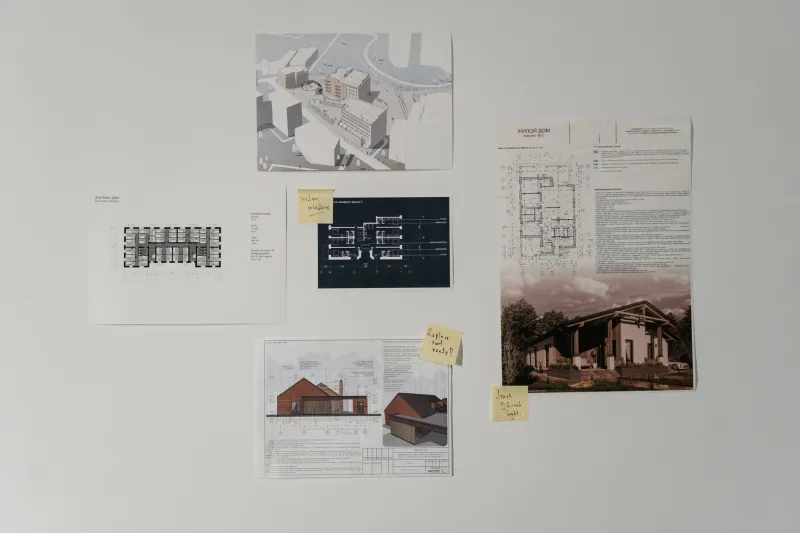
An estate agent’s particulars can say ‘outline planning permission granted’ in the same typeface as ‘chain free’. For a buyer or self-builder, the phrase deserves more suspicion than it usually receives. Outline consent is a genuine planning permission, but it is deliberately incomplete. It establishes the principle of development and, depending on what was applied for, may approve access. It does not usually approve appearance, landscaping, layout or scale. Those are reserved matters. The distinction is not a technicality; it is where the cost, risk and buildability of a site live.
What outline permission actually approves
An outline application seeks agreement in principle, with the details left to a later reserved matters application. The outline decision notice may be accompanied by parameter plans, design codes or illustrative material. Illustrative layouts are not approved unless the decision expressly says so. A drawing showing ten houses, a village green and a new access road may have persuaded a committee, but it does not necessarily bind the developer who follows. Buyers should read the decision notice, the approved plans and the conditions as a single package, not rely on the sales brochure.
Reserved matters are a second consent, not a formality
The reserved matters application must be made within the time limit set by the outline permission. It can be refused. The layout can be constrained by drainage, access, trees, heritage assets or the character of the area. A site marketed as suitable for ten dwellings may have an outline permission for ‘up to ten’, while the reserved matters scheme that can actually be approved delivers eight. That difference may be enough to change the land value, the professional fees and the viability of a small self-build project. The outline consent is the beginning of the planning argument, not the end.
Conditions carry costs that listings rarely mention
Outline permissions are often heavily conditioned. Pre-commencement conditions may require drainage details, contamination reports, highway works, archaeological investigations, biodiversity management plans or construction management statements before work can start. Some conditions require discharge applications and fees. Others impose ongoing obligations, such as travel plans or estate management arrangements. A condition that looks minor in the decision notice can become a programme risk when a self-builder is ready to start and the council has not yet discharged the detail.
Contributions and levy liability change the arithmetic
Section 106 agreements can require affordable housing, education contributions, highway improvements, open space, public realm or healthcare contributions. The community infrastructure levy may also apply, depending on the local charging schedule and the floorspace created. Indexation can increase the sums between the grant of permission and commencement. For self-builders, reliefs may exist, but they depend on procedure and timing. A permission that looks generous on density can become unviable once contributions are priced. The due diligence question is not simply ‘what is permitted?’ but ‘what must be paid, provided or mitigated before and during delivery?’
Outline consent does not cure site constraints
Planning permission does not grant rights over third-party land. Access may depend on a ransom strip, an easement or a private road that is not in the buyer’s control. Utility capacity, drainage capacity, ground conditions, flood risk, contamination and rights of way can all undermine a scheme that looks acceptable on paper. The outline permission may have been granted on the basis of an access arrangement that has not been secured in the title. That is a legal and practical problem, not a planning technicality.
A due diligence routine before exchange
First, obtain the full decision notice, all approved plans, the officer’s report and every condition. Read the reserved matters time limit and the commencement deadline. Second, ask a planning consultant to prepare a conditions compliance schedule and a reserved matters risk assessment. Third, ask the solicitor to check title, covenants, easements, access rights, ransom strips and any unilateral notices. Fourth, ask a drainage and utilities engineer to test capacity and connection routes. Fifth, commission ground investigation, contamination and flood advice where relevant. Sixth, obtain ecology and biodiversity advice, particularly where net gain obligations or protected species may arise. Seventh, price the section 106 and community infrastructure levy liabilities, including indexation. Eighth, test the likely reserved matters scheme against local policy and, if necessary, take pre-application advice from the local authority.
When to renegotiate or walk away
There are clear warning signs. The reserved matters deadline may have expired, or the permission may never have been implemented. Access may be unsecured. The section 106 may impose obligations that make a small scheme unviable. The site may lack drainage capacity, or the ground conditions may be unknown and potentially expensive. A buyer who exchanges contracts on the strength of an outline consent alone is buying a planning principle, not a building project. Outline permission can be a useful stage in the development process, but it is not a blank cheque. It should be read as a set of permissions, conditions and unresolved questions — and priced accordingly before exchange.