Weighing the Postbag: How Neighbour Representations Shape a Planning Decision
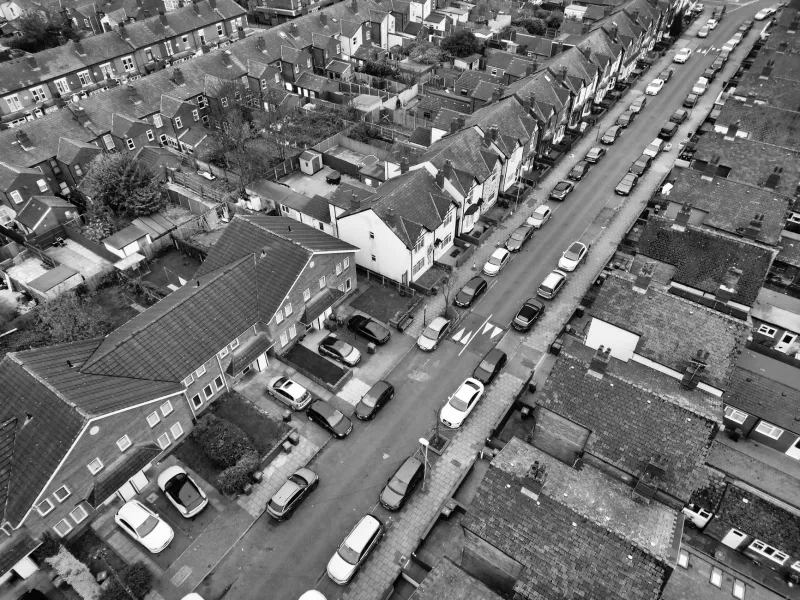
Few moments in the life of a planning application are as unnerving as the arrival of the consultation responses. A single letter from a neighbouring household can read like a verdict; a dozen can feel like the end of a scheme. In practice, the planning system is not constructed as a ballot, and understanding how representations are actually processed is one of the most useful forms of preparation available to an applicant.
The statutory position in brief
Local planning authorities are required to publicise applications and to take representations into account before determining them. What they are not required to do is count them. The decision must rest on the development plan, national policy and any other material considerations. A representation becomes material not because it is signed, emphatic or numerous, but because it bears on those questions.
This distinction is frequently lost in the heat of a contested application. Residents reasonably assume that if enough people object, the application must fail. Officers and committee members, by contrast, are bound to explain their decision by reference to policy. A planning committee that refuses a scheme solely because thirty people opposed it, without identifying a policy conflict, is inviting an appeal that it will very probably lose.
What actually counts as material
Some objections recur so often that they have acquired an undeserved aura of authority. Others, less dramatic, routinely decide cases.
- Overlooking and loss of privacy — material where the effect on habitable rooms is demonstrable and can be measured against separation distances in local design guidance.
- Overshadowing and daylight — material, and increasingly argued with technical evidence rather than assertion.
- Highway safety and parking stress — material, but usually assessed against published standards rather than anecdote about local congestion.
- Drainage, flood risk and contamination — material and often decisive, particularly where the site lies in a sensitive catchment.
- Heritage harm and character of the area — material, and weighed against the public benefits of the proposal under the statutory heritage balance.
- Noise and disturbance during construction — material only to a limited degree, since construction impacts are generally controlled by condition and separate environmental legislation.
By contrast, the following carry little or no weight, however sincerely held: the effect on the value of a neighbouring property, the loss of a private view, the personal circumstances of the objector, opposition to the principle of development where that principle is already established, and the suggestion that the applicant has behaved discourteously.
It is worth being candid about one of these. The impact on house prices is the most common ground of objection in England and among the least material. Planning decisions allocate land use in the public interest; they are not a mechanism for protecting the asset value of adjoining owners. An applicant who understands this can read a hostile letter with greater composure.
Why volume rarely decides
A petition of two hundred names and a detailed technical representation from a single household will be read differently. Officers are required to summarise representations in their report, and a well-evidenced objection on drainage may require far more engagement than a generic objection repeated many times.
That said, volume is not irrelevant. It can signal the breadth of local concern and may prompt a committee to examine an issue more closely, or a ward member to call the application in. The distinction is between volume as a prompt and volume as a reason. Only the former is legitimate.
Some authorities also operate local protocols around the number of representations that trigger a committee referral. These are procedural, not determinative; a referral means the decision is taken by elected members rather than under delegated powers, not that the outcome has changed.
Reading the consultation summary properly
Applicants should attend closely to the officer's report, which will typically list representations and then state which matters are considered material. That statement is the clearest signal of how the case is being assessed. If an objection is recorded but not addressed, it is worth raising in writing before determination. Silence in a report is not necessarily agreement with the objector, but it can become a ground of challenge if the decision is later contested.
Where a representation raises a genuinely new technical point, the appropriate response is usually further information rather than rebuttal. A drainage objection answered with a revised surface water strategy is more persuasive than one answered with a letter explaining why the neighbour is mistaken.
Responding without escalation
The temptation, when a neighbour writes in, is to reply in kind. This is almost always counterproductive. Planning officers are not arbiters of interpersonal disputes and tend to view a file that has become acrimonious with some weariness. A short, factual response addressing the material points, submitted through the proper channel and copied to the case officer, serves the application far better than a lengthy rebuttal of every line.
Three practical disciplines are worth observing. First, respond to the substance and ignore the tone. Second, where a concern is partly valid, concede it and explain the mitigation; credibility is cumulative. Third, avoid direct correspondence with the objector unless it is necessary and civil. Anything written in the heat of a dispute may end up on the public file.
Where disputes genuinely escalate
There are cases where opposition reflects a long-standing grievance unrelated to the application, or where a neighbour has engaged professional representation. In these circumstances the applicant should consider whether the scheme can be adjusted to remove the point of conflict entirely. A revised plan that eliminates an overlooking issue is worth more than any amount of advocacy.
It is also worth remembering that the neighbour will remain a neighbour after the decision. The planning process is short; the relationship is not. Applicants who have handled objections with restraint frequently find that the practicalities of construction — scaffolding, deliveries, party wall notices — proceed more smoothly for it.
The realistic conclusion
Neighbour letters matter, but they matter as evidence rather than as pressure. The strongest application is one that has anticipated the likely objections, addressed them in the submitted documents, and can point to policy rather than preference when the postbag arrives. An applicant who understands that the decision will be made on planning grounds, and who responds on planning grounds, holds the advantage — whatever the volume of correspondence on the file.