The Root of the Matter: Protected Trees and Development Viability in 2026
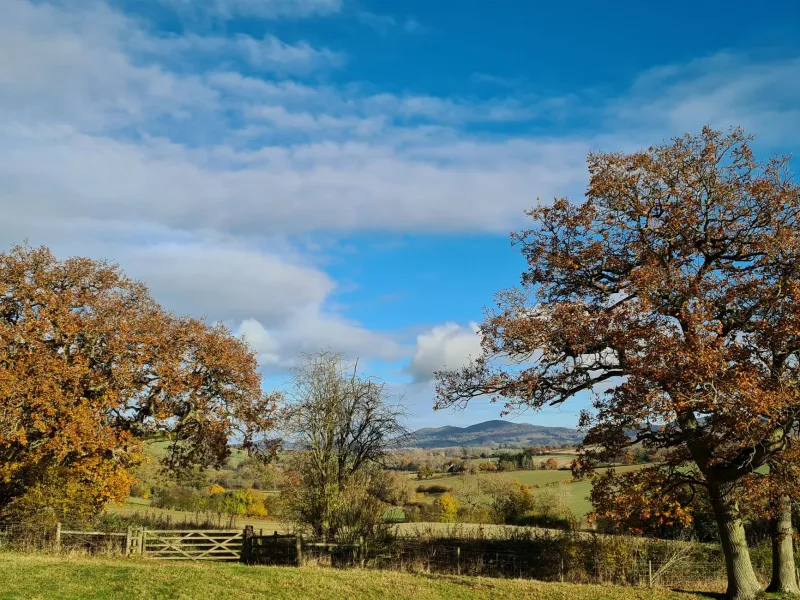
A mature oak at the end of a garden can appear to be an asset until a planning application is drafted. At that point it becomes a constraint with legal force. Tree Preservation Orders, or TPOs, are among the most familiar controls in the planning system and among the most frequently underestimated. In 2026, with local planning authorities under pressure to protect urban canopy and to demonstrate biodiversity gains, the arboricultural case is scrutinised with considerable care. For homeowners and developers, the practical question is not whether trees matter, but how far a scheme must move to accommodate them — and whether the resulting layout remains viable.
How a Tree Preservation Order Takes Effect
A TPO is made by a local planning authority under the Town and Country Planning Act 1990. It protects specified trees, groups or woodlands from cutting down, topping, lopping, uprooting, wilful damage or wilful destruction without the council’s consent. An order may be made urgently, but it is normally provisional at first. The authority must then decide whether to confirm it. In England, a provisional order ceases to have effect after six months if it is not confirmed, although confirmation can be for a modified area or with exclusions. A confirmed order remains in force indefinitely unless revoked or varied.
The distinction matters during due diligence. A provisional order still carries enforcement weight, and works carried out without consent while it is in force can be treated as an offence. Buyers and developers should therefore check the council’s register rather than relying on the presence or absence of a planning condition. A TPO can exist on land with no recent planning history, and it can protect trees that are not obviously prominent from the public highway.
Enforcement and the Duty to Replace
Unauthorised work to a protected tree is a criminal offence, not merely a planning breach. Prosecutions are relatively rare, but councils can and do pursue them where damage is significant or repeated. More commonly, the authority issues a tree replacement notice requiring the planting of suitable replacements. The duty to replace a protected tree that has been removed, uprooted or destroyed also arises in certain circumstances, and it can bind successive owners.
For a purchaser, this creates a due diligence point that is easy to miss. If a protected tree has been removed without consent, the liability may not disappear with the seller. The local authority can require replacement planting, and the obligation can affect the developable area of the site. A legal indemnity policy may address some financial consequences, but it will not neutralise the planning constraint.
What an Arboricultural Impact Assessment Must Prove
Most applications affecting protected trees are supported by an arboricultural impact assessment, usually prepared to BS 5837:2012. The assessment should identify the trees on and adjacent to the site, classify their quality and value, and calculate root protection areas. It must then explain how the proposed development affects those trees and what measures will avoid or reduce harm.
A common weakness is a report that catalogues trees without testing the layout. Councils are less interested in a general description of the canopy than in a clear account of construction activity within the root protection area. The root protection area is not a decorative circle on a plan; it is the minimum area around a tree that should be protected to preserve its rooting volume. Encroachment by foundations, drainage, hardstanding, service trenches or material storage can all be material. Where encroachment is proposed, the assessment must justify it and set out the construction method that will prevent damage.
The Root Protection Area as a Viability Test
The root protection area often decides more than the arboricultural report. It can determine the position of a driveway, the depth of a basement, the route of a foul drain and the number of plots that can be accommodated. On tight sites, the protected zone may consume the only practical access or the only area suitable for a turning head. A scheme that looks acceptable in outline can become unbuildable once the root protection area is mapped accurately.
This is why early arboricultural advice is usually cheaper than late redesign. A developer who commissions a topographical survey and a tree survey before fixing the layout has a chance to design around the constraint. A developer who treats the tree as a landscaping detail after the density has been agreed may find that the council’s reason for refusal is not a matter of taste but of engineering.
Common Mistakes and Method Statements
The most frequent errors are predictable. Unauthorised pruning is one: reducing a crown or removing lower limbs without consent can constitute an offence even where the tree survives. Inadequate method statements are another. A statement that simply says works will be carried out “carefully” is not a construction method. Councils expect site-specific details of protective fencing, ground protection, excavation techniques, service routing and supervision. The tree protection plan should match the method statement and the proposed layout.
A related mistake is to assume that consent for pruning is the same as consent for development. A tree works application deals with the tree operation; it does not authorise building beneath the canopy. The two processes are separate, and the council will assess the development against the tree constraint on its own merits.
Likely Damage and Replacement Conditions
When assessing whether to grant permission, councils consider the likelihood of damage to protected trees and whether the scheme can be conditioned to prevent it. Conditions may require a tree protection plan, an arboricultural method statement, a watching brief or pre-commencement inspections. Where loss is unavoidable, replacement planting is often required. The condition may specify species, size, location and establishment maintenance. Replacement planting is not a fee paid to offset loss; it is a continuing obligation that must be deliverable on the site.
For anyone acquiring land or preparing an application in 2026, the sensible approach is to treat protected trees as a primary constraint rather than a residual matter. The canopy may be the first thing seen, but the roots are what decide the scheme.