First Spade, Last Chance: Building a Defensible Commencement Record
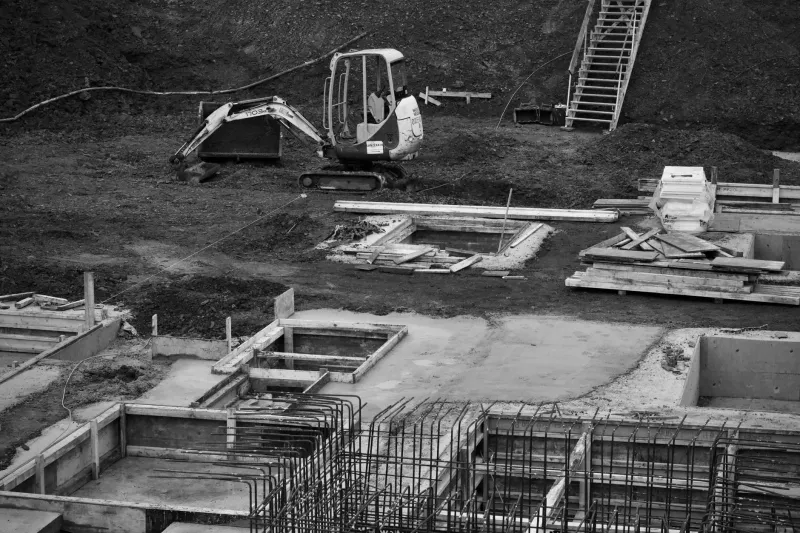
A planning permission is not a permanent endowment. It is a consent that must be implemented within a period fixed by statute or by condition, and once that period passes the permission is spent. The trap is rarely a deliberate one. More often it is a hopeful scrape of the site, a delivery of materials, or a contractor's assurance that work has 'started', none of which may be enough to stop the clock. For anyone holding a consent, or buying a site that carries one, the question is not simply whether works have begun but whether there is evidence that a material operation has been carried out.
The statutory clock in 2026
For most full planning permissions in England, the implementation period remains three years from the date of grant, unless the decision notice imposes a different period under section 91 of the Town and Country Planning Act 1990. Outline permissions follow a different rhythm: two years to submit reserved matters applications, and then two years from the approval of the last reserved matter to commence development, again subject to any condition that says otherwise. Those periods are not advisory. They are the outer limit of the consent.
The first practical step is therefore to read the decision notice, not the officer's report. Conditions can shorten or extend the period, and a condition may impose its own commencement trigger. A permission granted subject to a condition requiring works to begin within twelve months is not saved by the general three-year rule. Equally, a condition may require certain matters to be approved before development begins. That is a separate hurdle from the implementation deadline, but the two interact: a start made before a pre-commencement condition is discharged is not a lawful start, and it invites enforcement action even if the physical works are substantial.
What actually counts as a start
The statutory definition is found in section 56 of the 1990 Act. Development is taken to begin when a material operation is carried out. Material operations include digging foundations, laying underground services, constructing an access road, and other works that form part of the development. The courts have consistently held that the operation must be more than trivial. It must be a real step in the construction of the permitted scheme, not a gesture designed to keep the permission alive.
That distinction is where most disputes arise. Clearing a site, erecting temporary fencing, digging trial holes, or undertaking a soil survey may be useful preparatory work, but they will not necessarily amount to a material operation. Demolition can count if it is part of the development authorised by the permission, but not if it is an independent exercise. The test is not whether the developer intends to proceed. Intention alone does not implement a permission. Nor is it enough to point to a contractor's mobilisation or a stack of materials on site. The question is whether operations of substance, forming part of the permitted development, have genuinely begun.
A start made in breach of a pre-commencement condition is a further complication. If the condition requires a drainage scheme to be approved before works begin, commencing without that approval is unlawful. Whether such a start also fails to implement the permission will depend on the facts and on the wording of the condition, but it is not a risk worth taking. The prudent course is to discharge every pre-commencement condition first, then commence, then record what was done.
The CIL overlay
The Community Infrastructure Levy adds a separate layer of risk. Under the CIL Regulations 2010, a developer must submit a commencement notice to the collecting authority before development begins. The notice must be given before the first material operation, and failure to do so can trigger surcharges, loss of relief, and a liability that was not anticipated. For self-builders and others relying on relief, the commencement notice is not a formality. It is the event that fixes the levy position.
The definition of commencement for CIL purposes is tied to the first material operation. That means the same factual question arises twice: once for planning implementation and once for levy liability. A developer who starts without serving notice may find that the planning permission has been implemented but the CIL relief has been lost. The two outcomes are not symmetrical, and that asymmetry is precisely why the paperwork matters.
The evidence that makes a difference
A defensible commencement record should be assembled as the works happen, not reconstructed months later. Dated photographs with metadata are useful, particularly if they show foundations, services, or access works in context. A site diary recording the date, the operation, the contractor, and the plant on site is more persuasive than a bare assertion. Delivery tickets, invoices, plant hire records, and contractor instructions all help to corroborate the sequence of events. Building control notifications and the first inspection record can also support the case that development had begun.
Condition discharge correspondence should be kept alongside the decision notice. CIL correspondence, including the assumption of liability form and the acknowledged commencement notice, belongs in the same file. If the works are carried out by a contractor, a short witness statement from the site manager identifying the first material operation and its date can be valuable. The objective is to create a contemporaneous trail that a planning officer, an inspector, or a buyer's solicitor can follow without relying on memory.
Due diligence before the clock runs out
For buyers, an extant permission is only as valuable as its implementation status. A site marketed with 'planning permission granted' may be unimplemented and close to expiry. The decision notice, the condition discharges, and any CIL notices should be checked before exchange. If the permission has not been implemented, the deadline should be calculated from the notice itself. If there is doubt about whether a start has been made, a lawful development certificate can provide certainty, but it is not a substitute for a proper record.
Where a permission has lapsed, the fallback is usually a fresh application, with all the cost and uncertainty that entails. That is why the commencement file is worth the effort. It is cheaper to photograph a foundation trench and serve a notice than to explain to a lender why the consent that underpinned the purchase no longer exists. The first spade is also the last chance to preserve the permission. Treat the record accordingly.