Ten Per Cent, Approved Before Groundworks: Biodiversity Net Gain on Small Sites in 2026
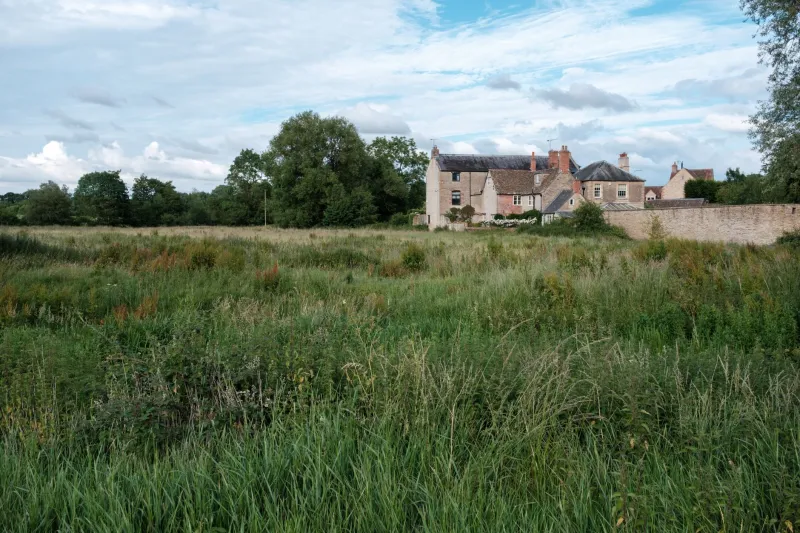
Photo: John Palmer, CC BY-SA 2.0, via Wikimedia Commons
Biodiversity net gain is no longer a large-site problem. The requirement has applied to small sites since April 2024, and in 2026 the consequences are well documented in every local authority area: schemes that were designed, costed and ready to start have sat idle while a biodiversity gain plan waited its turn in a case officer's queue. The planning permission was not the obstacle. The condition attached to it was.
The ten per cent that stops the diggers
The mechanism is plain and unforgiving. Permission is granted subject to the biodiversity gain condition, which prohibits commencement until the local planning authority has approved a biodiversity gain plan. Ten per cent is the floor: the completed development must deliver a net gain in biodiversity of at least a tenth over the pre-development baseline, measured with the statutory metric and secured for a minimum of thirty years.
Two features catch people out. First, the ten per cent is expressed in biodiversity units rather than in area, so the loss of a modest patch of low-distinctiveness grassland can require a far larger area of new habitat — or an off-site purchase — to balance the ledger. Second, the clock only starts when the plan is approved. Treating the discharge of a pre-commencement condition as a loose end to be tidied after the contract is signed is the single most common cause of avoidable delay on small residential schemes.
Which sites are in scope, and which are not
The definition of a small site covers developments of one to nine dwellings, commercial floor space below 1,000 square metres, and sites under one hectare. Within that band, several genuine exclusions apply.
- Householder applications. Extensions and alterations to an existing dwelling are outside the regime altogether.
- De minimis. Where the impact falls below 25 square metres of habitat, or five linear metres of a hedgerow or similar linear feature, the obligation does not arise.
- Self-build and custom build. A development of no more than nine dwellings on a site of no more than 0.5 hectares, built by or for the occupier, can claim an exemption.
- Irreplaceable habitats. Impacts on ancient woodland, lowland fen and similar habitats are handled through the protections that already exist, rather than through the metric.
The important point about exemptions is that they are rarely self-certifying. The gain plan is generally where the exemption is recorded and evidenced, and a local planning authority is entitled to ask for documentation that supports it. An assertion in a covering letter is not the same as a defensible position.
Using the small sites metric properly
The Small Sites Metric exists precisely because the full statutory metric is a heavy instrument for a nine-plot scheme. It simplifies habitat assessment and removes some of the more elaborate spatial calculations, and for most qualifying schemes it is the sensible route.
That said, practice varies. Some authorities ask for the full metric regardless; others want the simplified output accompanied by a Phase 1 habitat survey. Check the validation checklist before instructing an ecologist, not afterwards. The cost of a rewritten report is trivial beside the cost of a month lost in validation.
Credits, the register and the thirty-year tail
Most small sites cannot accommodate a meaningful ten per cent gain on site. A plot of eight dwellings rarely has spare ground for new hedgerow, scrub and meadow, and even where it does, the thirty-year management and monitoring obligation is a commitment that outlives the developer's interest in the site.
Off-site provision is therefore the norm, and the market has matured since 2024. Habitat banks and registered providers supply biodiversity units through the national register of biodiversity gain sites maintained by Natural England. Units are bought under an allocation agreement, and the gain is secured either by planning obligation or by conservation covenant.
Where no units are available, statutory biodiversity credits can be purchased from Natural England as a last resort. They are deliberately priced above the market to discourage their use, and a scheme that relies on them is usually a scheme that left the ecology work too late. Spatial preference also matters: units in the same local authority area are preferred, with the national character area as the fallback.
Where ecology reports come unstuck
Four failures recur.
- Seasonality. A habitat survey carried out in the wrong month may not be accepted, and the survey window is not negotiable.
- Baseline error. Overstating the value of existing habitat inflates the ten per cent and makes delivery unachievable; understating it invites refusal of the plan later.
- Boundary habitats. Hedgerows, veteran trees and linear features are routinely omitted from early layout plans and are expensive to reinstate once the layout is fixed.
- No off-site agreement. A gain plan that names a habitat bank without a written allocation is not a gain plan; it is an aspiration.
A sequence that works
The order of operations matters more than the paperwork. Instruct the ecologist before the layout is frozen, not after. Decide on-site versus off-site provision while there is still design flexibility. Secure any off-site allocation in writing before the application is submitted. Draft the gain plan alongside the planning statement. Use pre-application advice to confirm which metric the authority expects. And budget the thirty-year management and monitoring cost at the outset, because it is a real, bankable liability and not a rounding error.
Biodiversity net gain is not an unreasonable regime, and for most small schemes it is entirely manageable. What it does not tolerate is being treated as a matter for the end of the process, when the only remaining lever is a start date that has already been promised.