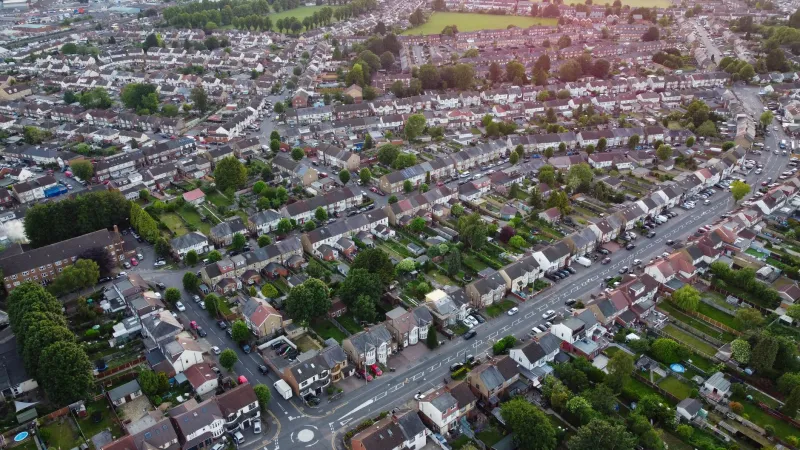
The Skip Behind the Wall: Conservation Area Demolition and the Buyer’s Audit
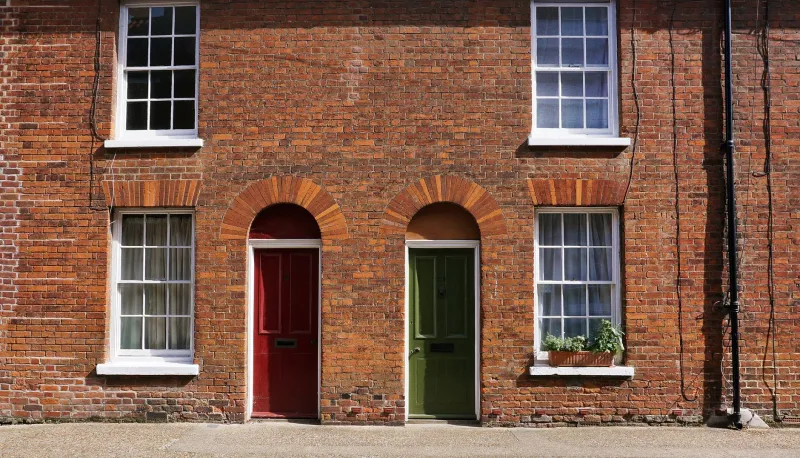
A conservation area is often described as a matter of character, but for a buyer or developer it is also a matter of consent. The point is easily missed when a site is marketed as unmodernised, ripe for improvement or suitable for redevelopment. A skip at the front of a property is not, by itself, evidence that demolition has been approved. In a conservation area, taking down a building can require planning permission in its own right, and the permission for a new house or extension does not necessarily authorise the clearance that precedes it.
A separate control, not a footnote to alteration
Demolition of a building in a conservation area is subject to specific statutory control under the Planning (Listed Buildings and Conservation Areas) Act 1990. The practical consequence is that conservation area status can bring demolition within the planning system even where the building is not listed. This is distinct from listed building consent, which protects the listed building itself, and from ordinary permitted development rights, which may allow certain alterations but should not be read as a general licence to remove structures.
The word ‘building’ is broader than some buyers expect. It can take in parts of buildings and structures that do not look like the principal dwelling. There are exemptions and thresholds for certain minor structures, walls and outbuildings, but these are not a safe basis for assumption. The precise scope depends on the demolition direction, the height and location of the structure, and the local authority’s reading of the works. A garden wall beside a highway, a detached outbuilding or a chimney stack may each raise a different question. The due-diligence task is to identify the question, not to assume the answer.
Partial demolition and the rebuild trap
Many schemes do not begin with complete clearance. They begin with the removal of a roof, a rear range, a chimney, an internal wall or a boundary structure. Some of that work will be ordinary alteration; some may amount to demolition requiring permission. The distinction is not always resolved by measuring the volume removed. Local authorities look at the character of the works, the extent of the loss and the effect on the conservation area. A proposal that leaves a facade standing while removing the greater part of the building behind it can still be a demolition proposal in substance.
Rebuild proposals deserve particular care. ‘Demolish and rebuild’ is not a neutral description, and it is not made acceptable by reproducing the same footprint. Even where the new building is similar in size, the planning authority will consider design, materials, scale, siting and the effect on the conservation area. A consent for alterations is not a consent for reconstruction. If the works involve the removal of a building and its replacement, the buyer should expect to see a full planning permission and, where relevant, conservation area demolition consent, rather than a collection of building regulations approvals and a structural engineer’s letter.
Consents that travel together
Conservation area demolition rarely sits alone. Listed building consent may be needed where the building is listed, and that consent is not interchangeable with planning permission. Advertisement consent may be required for hoardings or site signage. Tree protection and conservation area tree notification may apply to works near the site. Party wall awards, building regulations approval, asbestos management and ecology checks, including bats, are separate regimes with their own timetables.
The sequence matters. A developer who obtains planning permission for a replacement dwelling but not the demolition consent may find that the site cannot lawfully be cleared. A buyer who inherits an incomplete consent should check whether it has been implemented, whether pre-commencement conditions have been discharged and whether any approval has lapsed. A decision notice is not a clean bill of health; it is a document to be read with its conditions and the approved plans.
What to check before exchange
The first step is to establish the planning status of every structure on the site, not only the main house. Obtain the planning history, decision notices, approved plans, officer reports and any discharge of conditions. Check the local land charges register and the enforcement register. Ask specifically whether any demolition has taken place and, if so, on what authority. A lawful development certificate may be useful where the seller claims that works are immune from enforcement, but it should be supported by evidence rather than assertion.
Read the conservation area appraisal and management plan, and check for Article 4 directions that remove permitted development rights. Look at the local list of buildings of merit, even though local listing is not the same as statutory listing. Commission a measured survey and a photographic record of walls, outbuildings and boundary features. If the proposed scheme involves any removal, ask the conservation officer for pre-application advice and keep a written record of the response.
Contract terms should reflect the risk. A buyer may wish to make completion conditional on satisfactory evidence of consent, or retain a sum pending discharge of conditions. Where demolition has already occurred without consent, price the risk openly rather than treating the site as a blank canvas.
The enforcement problem
Unauthorised demolition is a breach of planning control, and it can leave a site with an enforcement problem rather than a clean development opportunity. The local authority may issue an enforcement notice, and in urgent cases a stop notice. For listed buildings, unauthorised demolition is a criminal matter with serious consequences. For conservation areas, the authority may seek a scheme that remedies the harm, which can include reinstatement or a revised proposal that reflects what has been lost.
The passage of time is not a substitute for consent. Some operational development may become immune from enforcement after a period, but immunity must be evidenced and is not established by a seller’s assurance or a long period of quiet. A buyer who intends to rely on it should seek a lawful development certificate and specialist advice. Until then, the safe assumption is that the missing consent remains a live issue.
A practical sequence
Establish the conservation area boundary and the status of each structure. Map every proposed removal. Match the works to the consents on file. Check conditions, time limits and implementation. Ask the conservation officer what the authority expects. Then decide whether the risk is acceptable, whether it can be priced, or whether it should be a condition of exchange. In a conservation area, the skip should follow the consent, not the other way round.